
Chapter 3: Supporting Sentences
What you will do in this chapter:
1. Learn about supporting sentences
2. Learn about coherence and unity in writing
3. Practice writing supporting sentences
4. Practice proofreading your writing
Learn It!
To understand supporting sentences better, learn their location, function, and features.
- Location – after the topic
- Function – support the controlling idea introduced in the topic sentence by providing descriptions, reasons, facts, examples, or definitions
- Features – maintain unity and coherence of the paragraph with a narrow focus on the controlling idea.
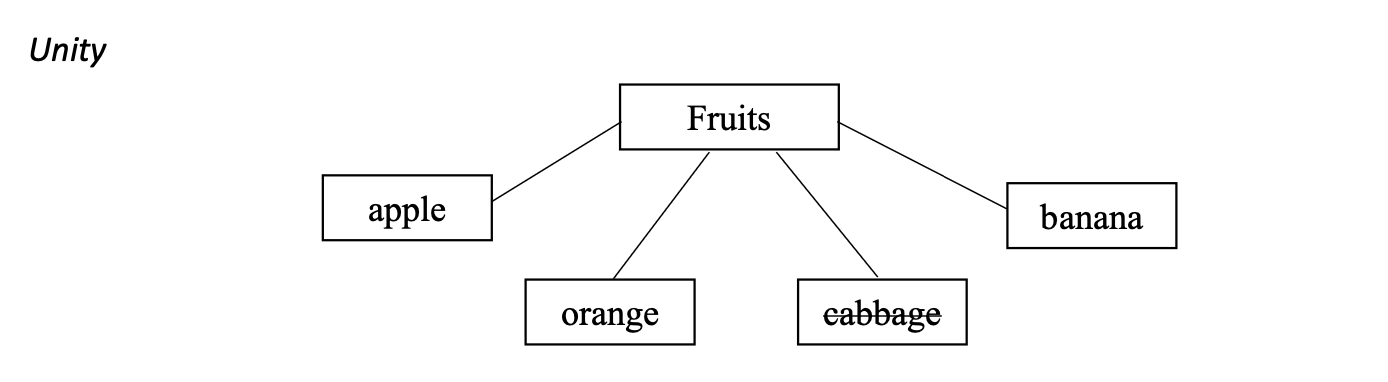
Paragraph unity means writing about only one main idea in a paragraph. In other words, supporting sentences need to support the controlling idea stated in the topic sentence. When you want to express a new main idea about a topic, begin a new paragraph.
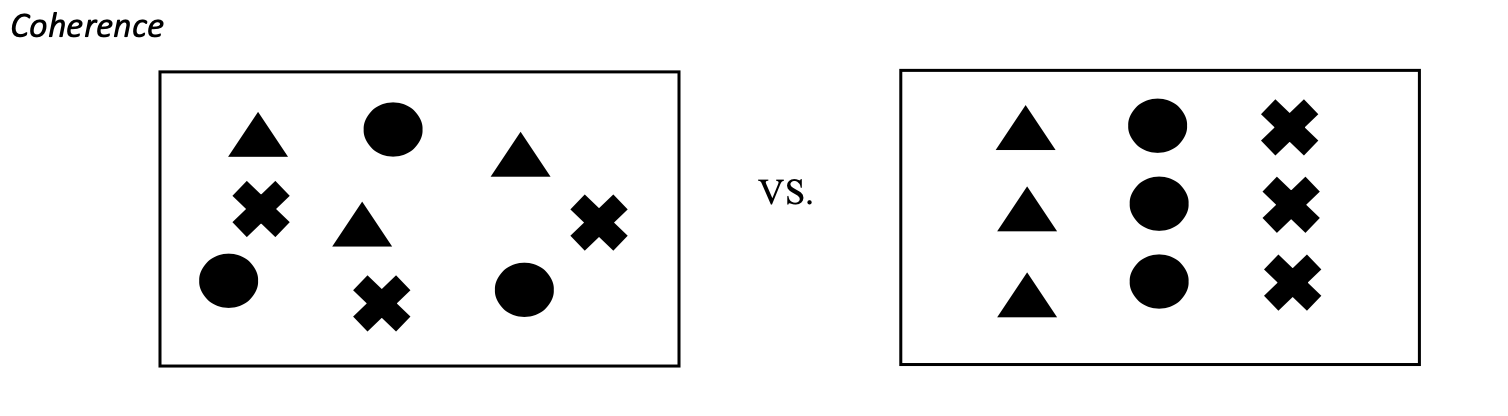
Coherence in writing means the paragraph is easy to read and understand. All of the ideas fit together and one idea connects logically to the next. Writers typically create coherence in paragraphs through effective use of transitional words and phrases. These words indicate that a new supporting point is being introduced.
Transitional Words/Phrases
Here are some examples for transitional words and phrases commonly used in supporting sentences (see Appendix 2 for more examples):
First(ly), Second(ly), Third(ly), Next, Finally,
To begin with, In addition, Furthermore,
Practice It!
Exercise 1: Read the example topic sentences (TS) and supporting sentences (SS) below. Choose from words in the box to label the type of support that each of the supporting sentences provides.
Describe, Give Reasons, Give Examples, Give Facts, Define
1. ________________________
TS: Médecins Sans Frontières (MSF) provides help to the world’s most vulnerable people.
SS: To begin with, MSF is a humanitarian non-governmental agency specialising in medical assistance.
2. ________________________
TS: The quiet region of Tuscany attracts millions of tourists every year.
SS: First, because of its rolling green hills speckled with vineyards and olive trees, visitors are treated to Italy’s most fragrant wines and delectable cuisine.
3. ________________________
TS: Listening is the most difficult skill to master when learning an additional language.
SS: One factor is that an individual has no control over the speed or rate of input received when listening.
4. ________________________
TS: Stanford University has one of the most ethnically diverse campuses in the United States.
SS: Finally, it is ranked third in the U.S. News diversity index list.
5. ________________________
TS: Canada has a variety of national parks.
SS: For example, Fundy National Park, on the Atlantic coast, is renowned for having the highest tides in the world.
Exercise 2: Order the sentences (a-g) to create a paragraph. One of the sentences is irrelevant and should not be included. Answer the questions below.
The Periodic Table
| Sentence Order | |
| a. Elements are listed in the table from left to right and top to bottom in particular groups (by column) and periods (by row). | 1)_____ |
| b. Thus, the table is a quick reference helping researchers to determine which elements might behave the same chemically or which could have similar atomic structures or weights. | 2)_____ |
| c. To begin with, it describes the atomic structure of every known chemical element in a highly organized way. | 3)_____ |
| d. The periodic table of elements is an invaluable reference tool for chemists. | 4)_____ |
| e. Secondly, scientists often have a poster of the table in their laboratory. | 5)_____ |
| f. To sum up, the table is an essential tool for scientists since it alleviates the need to memorize the properties of each element. | 6)_____ |
| g. Moreover, elements in each group or period have similar or dissimilar characteristics and no two elements are the same | Irrelevant ______ |
1. The sentence you listed as 1) above should be the topic sentence. Write the topic _________________
_____________________ and controlling idea ________________________________________________
2. The correct order for the supporting sentences is [__] [__] [__] [__].
3. List the transitional words that helped you to order the sentences:
_______________________________________________________________________________________
4. Which type of support (see Exercise 1 above) do the supporting sentences provide?
_______________________________________________________________________________________
Write It!
Exercise 3: For the two topics given below, write one topic sentence and two to three supporting sentences.
1. Topic: A popular topic on social media (SNS) Topic Sentence _____________________________________________________________________________________
_____________________________________________________________________________________
Supporting Sentence 1 __________________________________________________________________
_____________________________________________________________________________________
Supporting Sentence 2 __________________________________________________________________
_____________________________________________________________________________________
Supporting Sentence 3 __________________________________________________________________
_____________________________________________________________________________________
2. Topic: A place worth visiting Topic Sentence _______________________________________________
_____________________________________________________________________________________
Supporting Sentence 1 __________________________________________________________________
_____________________________________________________________________________________
Supporting Sentence 2 __________________________________________________________________
_____________________________________________________________________________________
Supporting Sentence 3 __________________________________________________________________
_____________________________________________________________________________________
Exercise 4: Read through your topic sentences and supporting sentences above. Use the checklist below to consider their features and function. If the answer to the question is “Yes,” put a checkmark (✓) in the box.
◻︎ 1. Does the topic sentence introduce both the topic and controlling idea?
◻︎ 2. Does the topic sentence indicate the supporting points to follow?
◻︎ 3. Do the supporting sentences: a) describe, b) give reasons, c) give examples, d) give facts, or e) define? Circle the type(s) of support.
◻︎ 4. Are the supporting sentences directly related to the controlling idea of the topic sentence (i.e., show unity)?
◻︎ 5. Do the supporting sentences start with a transitional word/phrase (i.e., demonstrate coherence)?
FYI
“I” vs. “You” vs. “He” or “She” – Use of pronouns in academic writing
Writers can choose to write from different points of view: the first (“I,” “ we,” “me,” “us,” “my,” “mine,” “ours”), second (“you,” “your,” “yours”) and third person (“he,” “she,” “it,” “they,” “him,” “her,” “its,” “theirs”). In academic writing, however, use of appropriate pronouns, particularly first-person pronouns and gendered pronouns (e.g., “he,” “she”) is a greatly debated area. Here are some guidelines to help students who are just beginning to learn how to write in an academic style:
✻ The use of the first-person (e.g., “I,” “we”) is gaining acceptance in many disciplines when reporting on one’s own research. However, many beginner writers tend to rely too much on their personal opinion and, therefore, overuse the first person. To write about topics from an objective position and place more emphasis on the topic, one of the following methods can be used:
1. Use the third person
Example: It is important for us to get quality sleep so that we can focus in class.
➔ It is important for students to get quality sleep so that they can focus in class.
2. Delete the first person clause
Example: I think that online learning has some benefits for students and teachers
➔ Online learning has some benefits for students and teachers.
3. Use the passive voice
Example: We took the entrance exam in January, but we had to wait until March for the results.
➔ The entrance exam was held in January, but results were not available until March.
4. Use another subject
Example: We should experience many new things while we have the freedom to do so.
➔ Young people should experience many new things while they have the freedom to do so.
✻ Using second-person pronouns (e.g., “you”) to address the reader is usually not appropriate since it may misrepresent the reader. Instead, try rewording the sentence or use the impersonal pronoun “one.”
Example: If you want to improve your listening skills, repetition is a crucial factor.
➔ If students want to improve their listening skills, repetition is a crucial factor.
Example: You can see in Table 1 the results from the first treatment.
➔ Table 1 shows the results from the first treatment.
Example: Watching television dramas can have a positive impact on your life.
➔ Watching television dramas can have a positive impact on one’s life.
✻ The use of third-person gendered pronouns is increasingly regarded as outdated. One alternative is to use the plural pronoun “they” or “their” in place of the singular “he,” “she” or “his,” “her.” A more traditional approach is the use of the phrase “he or she.”
Example: A person’s reaction to the drug may depend on his daily habits.
➔ A person’s reaction to the drug may depend on their daily habits.
➔ A person’s reaction to the drug may depend on his or her daily habits.