
Chapter 12: Peer Review
What you will do in this chapter:
1. Practice peer review of writing
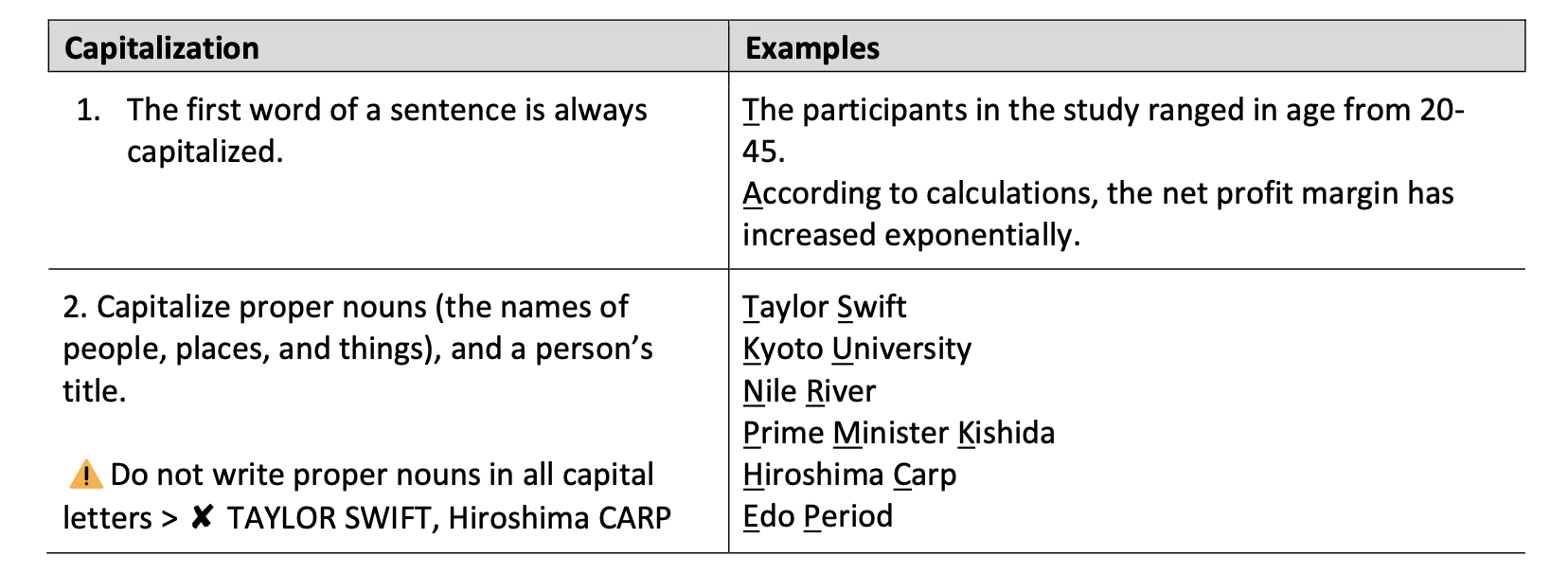
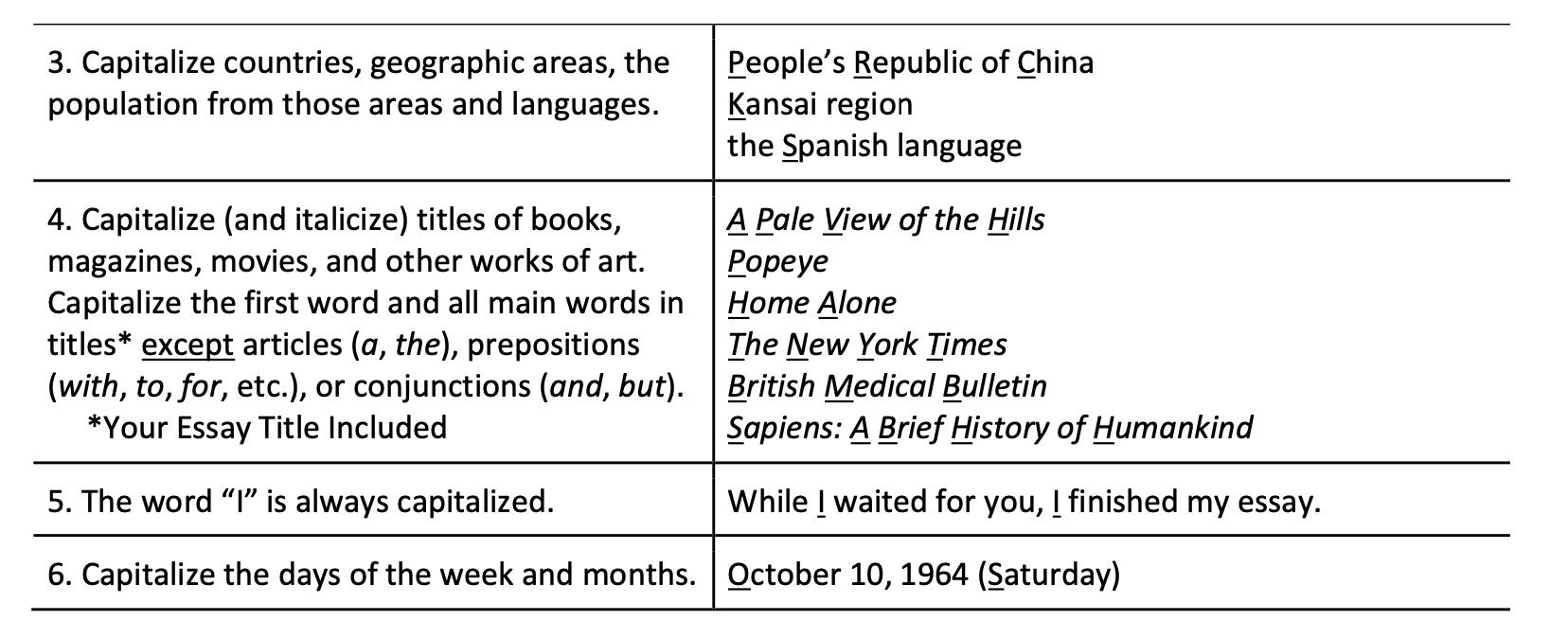
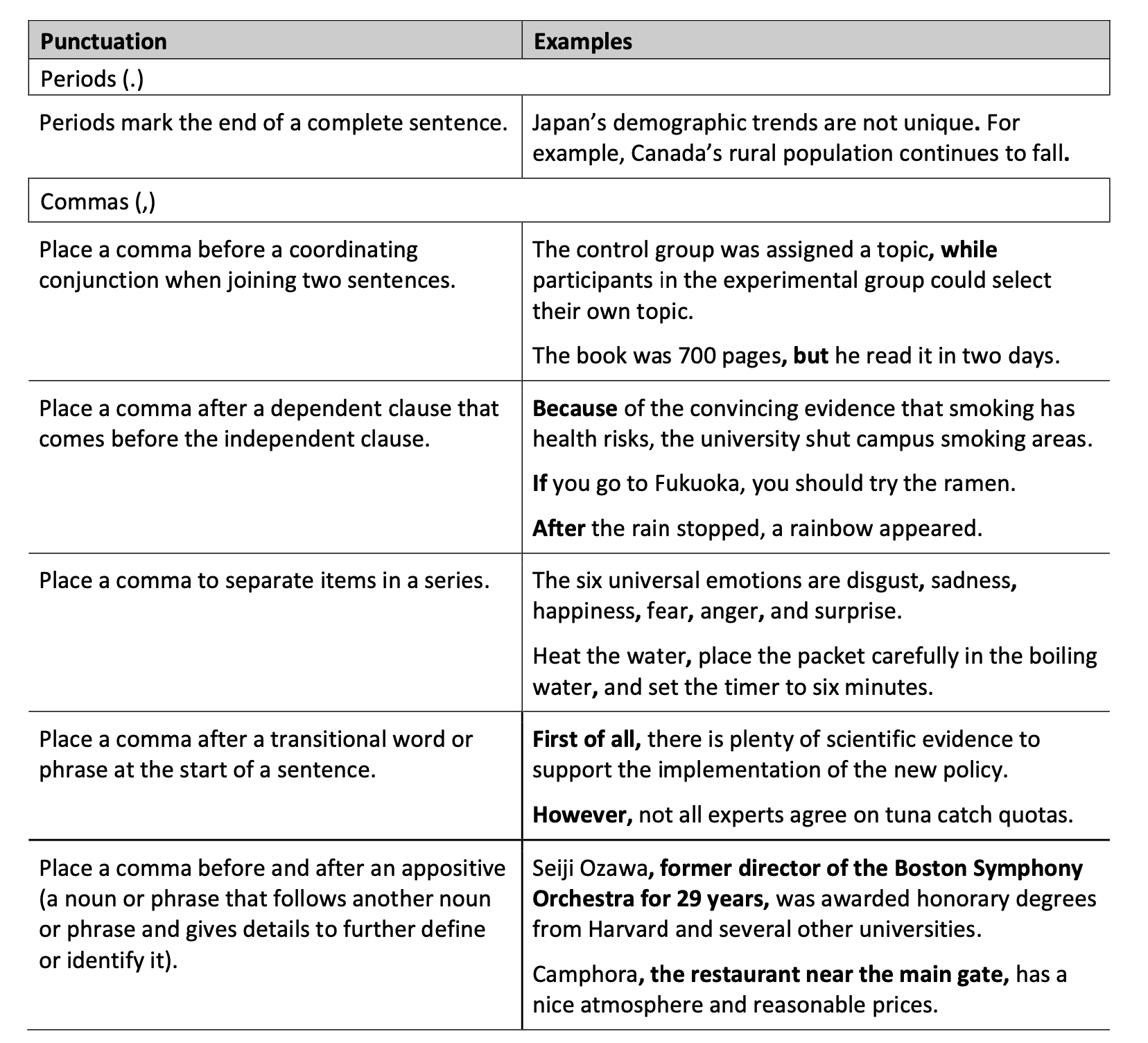
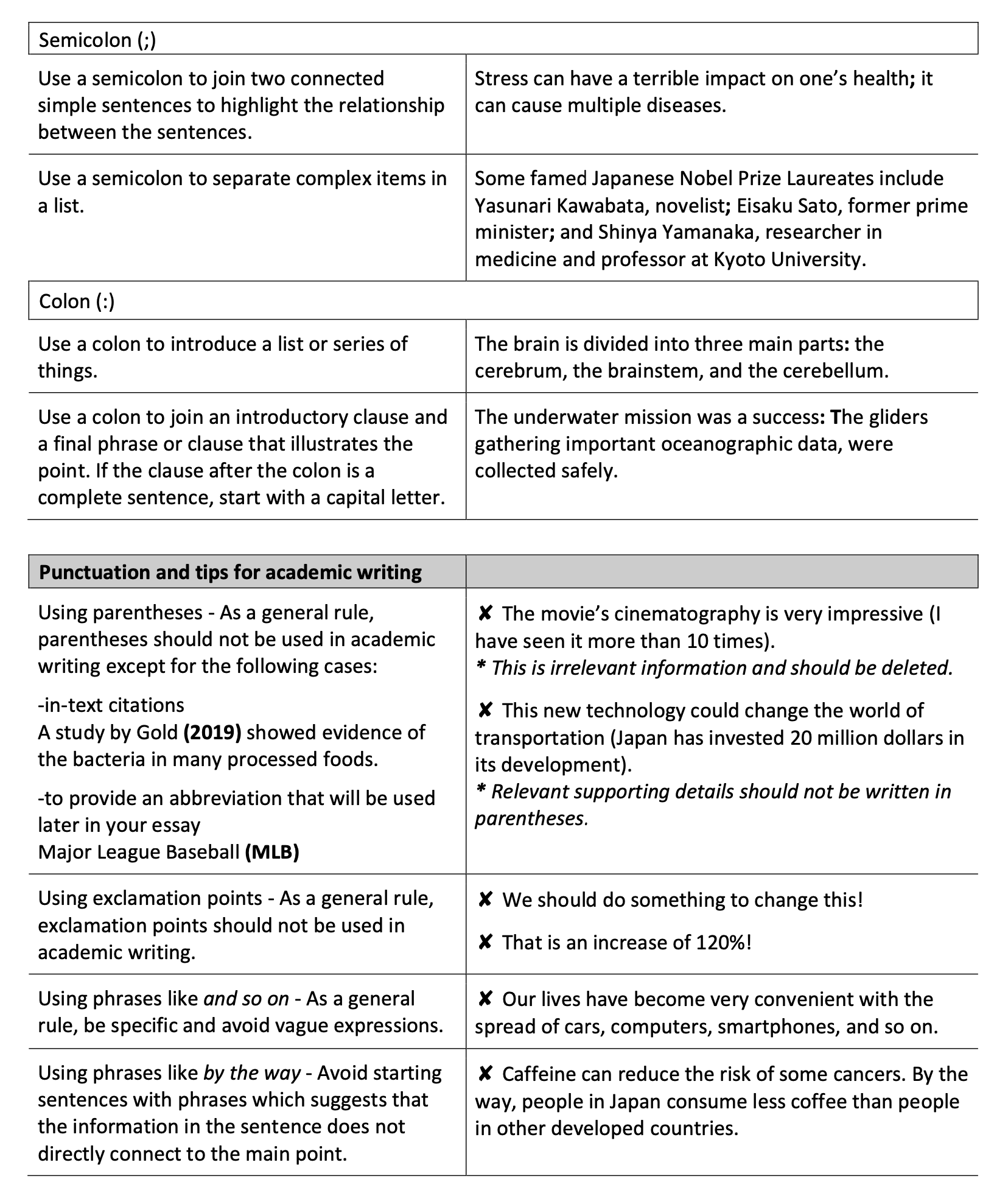
2. Learn basic rules for capitalization and punctuation
3. Revise your essay draft
Learn It!
Step 5: Get feedback on your writing
Peer Review
What is peer review?
Good writers read the work of other writers. They also ask people to read their writing and get comments to help them improve their writing; this method of getting feedback is called peer review.
Why should you do peer review?
- Another reader can find parts of your writing that are difficult to understand.
- Another reader can point out irrelevant information.
- Another reader can point out where more information or explanation is necessary.
- Another reader can reassure you about the strong points of your writing. • You can learn a lot when reading others’ writing.
How should you do peer review?
- Read your peer’s entire paper first without commenting.
- On the second reading, try to identify the thesis statement and topic sentences.
- Note any places where there is not enough information, where something may need to be clarified, where there is irrelevant information, or where transitional words should be added. Do not worry about spelling and grammar, unless the grammar interferes with your understanding.
- Be specific. The more specific you are, the easier it will be for your classmate to revise. See some examples of constructive comments below.
- Do not forget to give positive comments.
Examples of constructive feedback
- The focus of the essay is unclear to me from this thesis statement.
- Could you give a more specific example here?
- This evidence gives strong support for your thesis statement.
- You may need more support from outside sources in this body paragraph.
- I am not sure what this phrase/sentence means.
- You use a lot of transitional words, which makes your paragraphs very coherent.
Exercise 1: Discuss with a partner whether each of the following questions/comments is appropriate for peer review.
a. Don’t you think you need a better conclusion?
b. You had better make your essay longer.
c. I am not sure how this point supports your thesis statement. Maybe you could omit it.
d. What are these sentences?
e. Your hook was very effective in getting my attention.
f. You should add a title.
g. Fix this grammar!
h. This is a perfect paragraph. Well done!
i. This example might fit better in the first body paragraph.
j. This part is interesting. I’d like to know more details about it.
Practice It!
Exercise 2: Read classmates’ essays and give them feedback using the directions below.
1. Before exchanging papers, explain to your partner what your essay is about. Tell them any problems you had writing this draft and which things you want advice on.
2. Follow the guidelines in “How should you do peer review?” on p. 57.
3. When you are finished, discuss the comments with your partner.
Carefully consider the feedback you received. Whether you accept all of your peer’s advice or not is your decision.
Learn It!
Practice It!
Revise your first draft
Exercise 3: Review the information in the table as you carefully proofread and revise your essay draft.